AJIO BUSINESS | Designing for Retailers at Scale
Streamlining bulk buying for India's B2B retailers
Streamlining bulk buying for India's B2B retailers
12%
Increment in Add to cart rate
64%
Reduction in scroll length per page
• CONTEXT
Introduction
AJIO = Reliance connecting fashion brands to local retailers
AJIO = Reliance connecting fashion brands to local retailers
AJIO = Reliance connecting fashion brands to local retailers
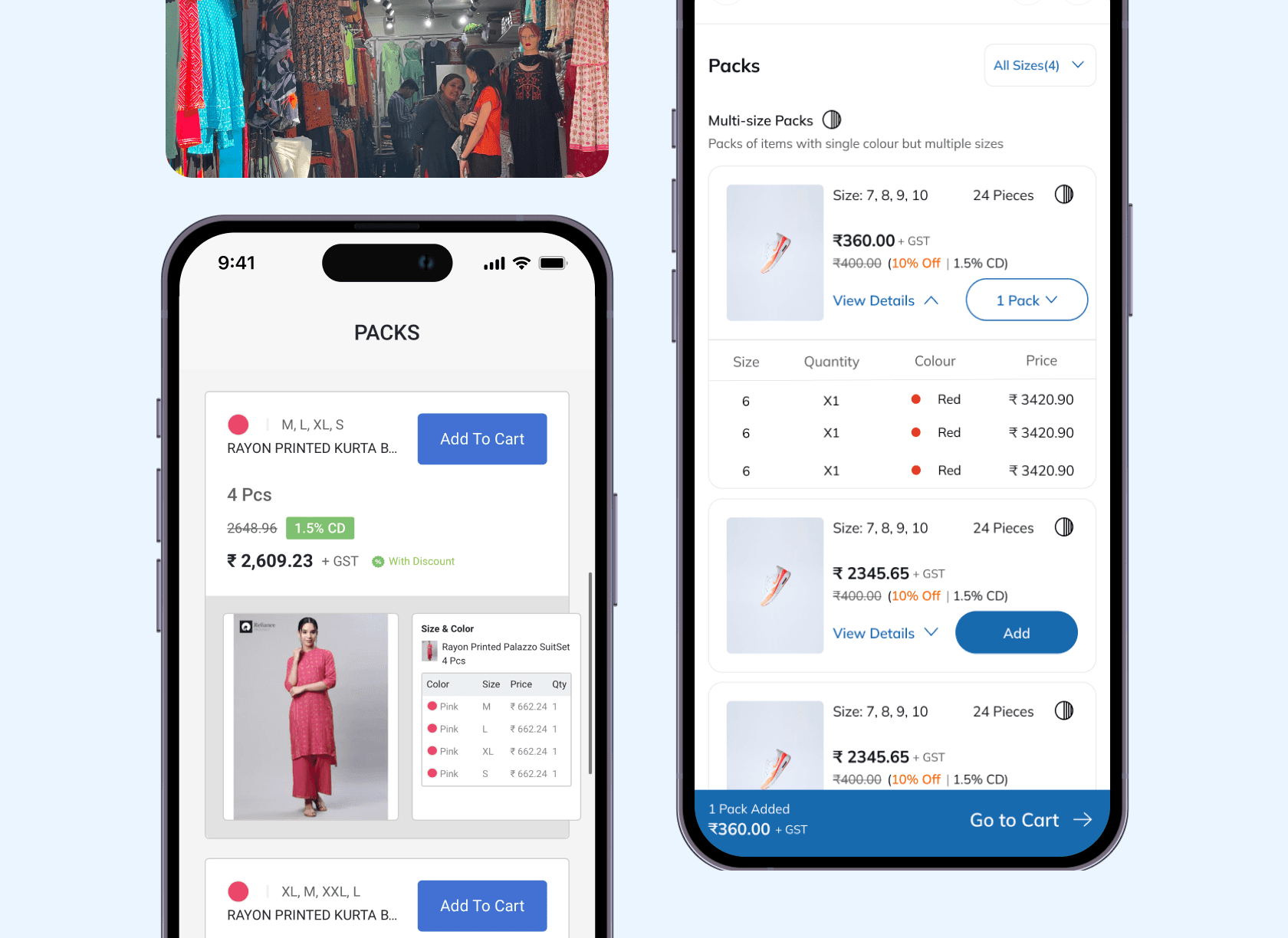
Ajio Business is a B2B fashion platform by Reliance designed for small & medium-sized retailers to grow their business. It connects thousands of manufacturers and brands to millions of small retailers, enabling them to buy bulk packs of clothing, footwear, or accessories - often in mixed sizes and colours - at wholesale prices, delivered directly to their shops.
Ajio Business is a B2B fashion platform by Reliance designed for small & medium-sized retailers to grow their business. It connects thousands of manufacturers and brands to millions of small retailers, enabling them to buy bulk packs of clothing, footwear, or accessories - often in mixed sizes and colours - at wholesale prices, delivered directly to their shops.
ROLE
UX Designer (from strategy to execution)
Timeline
2023
6 months
Team
UXR, PM, UX Writer, UI Designer
PLatform
AJIO Business
Mobile App
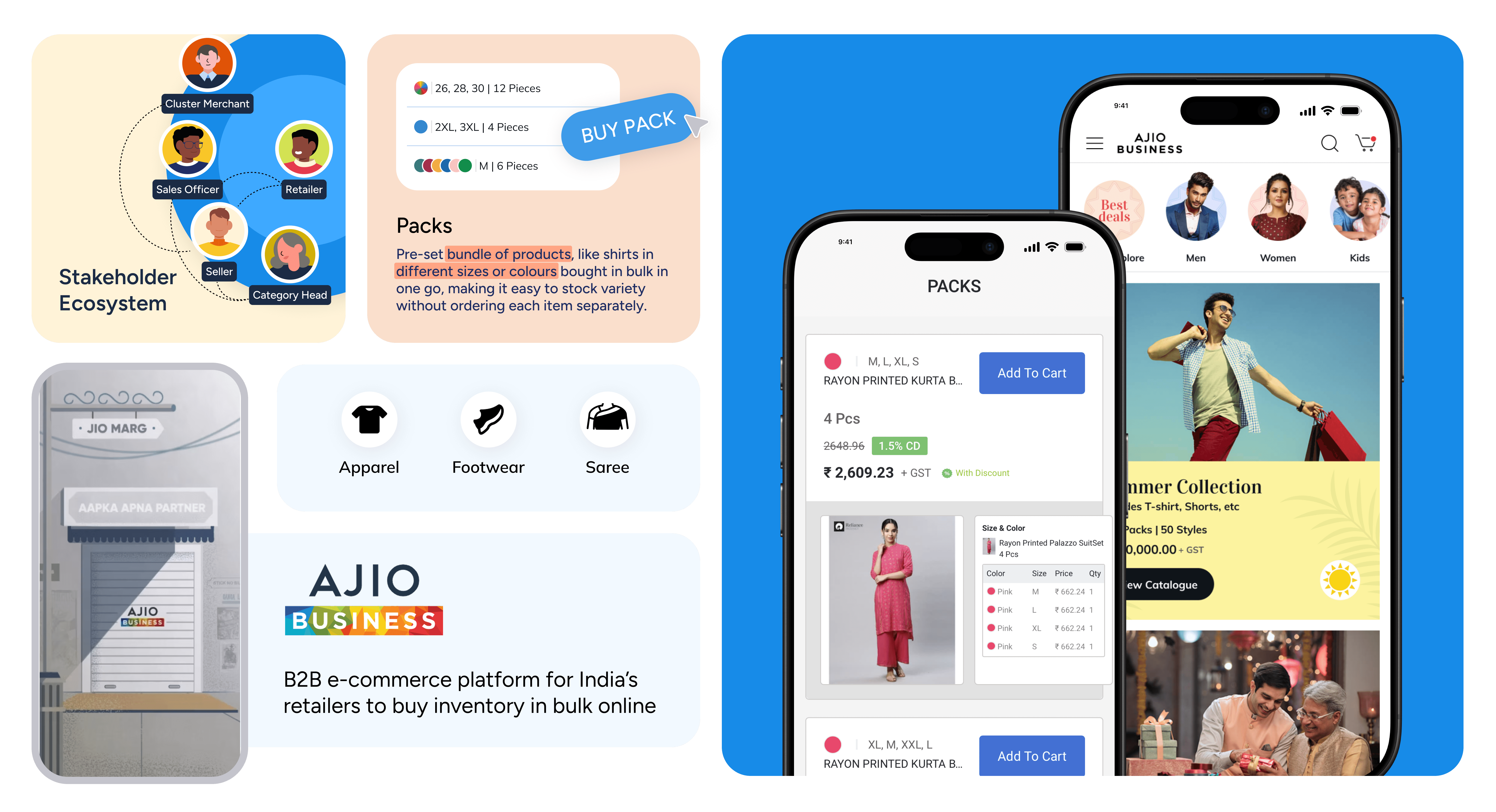
AJIO Business provides India's local retail shop owners online access to bundled wholesale products (size and colour variants clubbed together) across multiple categories like footwear, apparel and accessories
• PROBLEM
PROBLEM
Retailers struggled to build their cart in a way that matched their real restocking needs
Retailers struggled to build their cart in a way that matched their real restocking needs
Retailers struggled to build their cart in a way that matched their real restocking needs
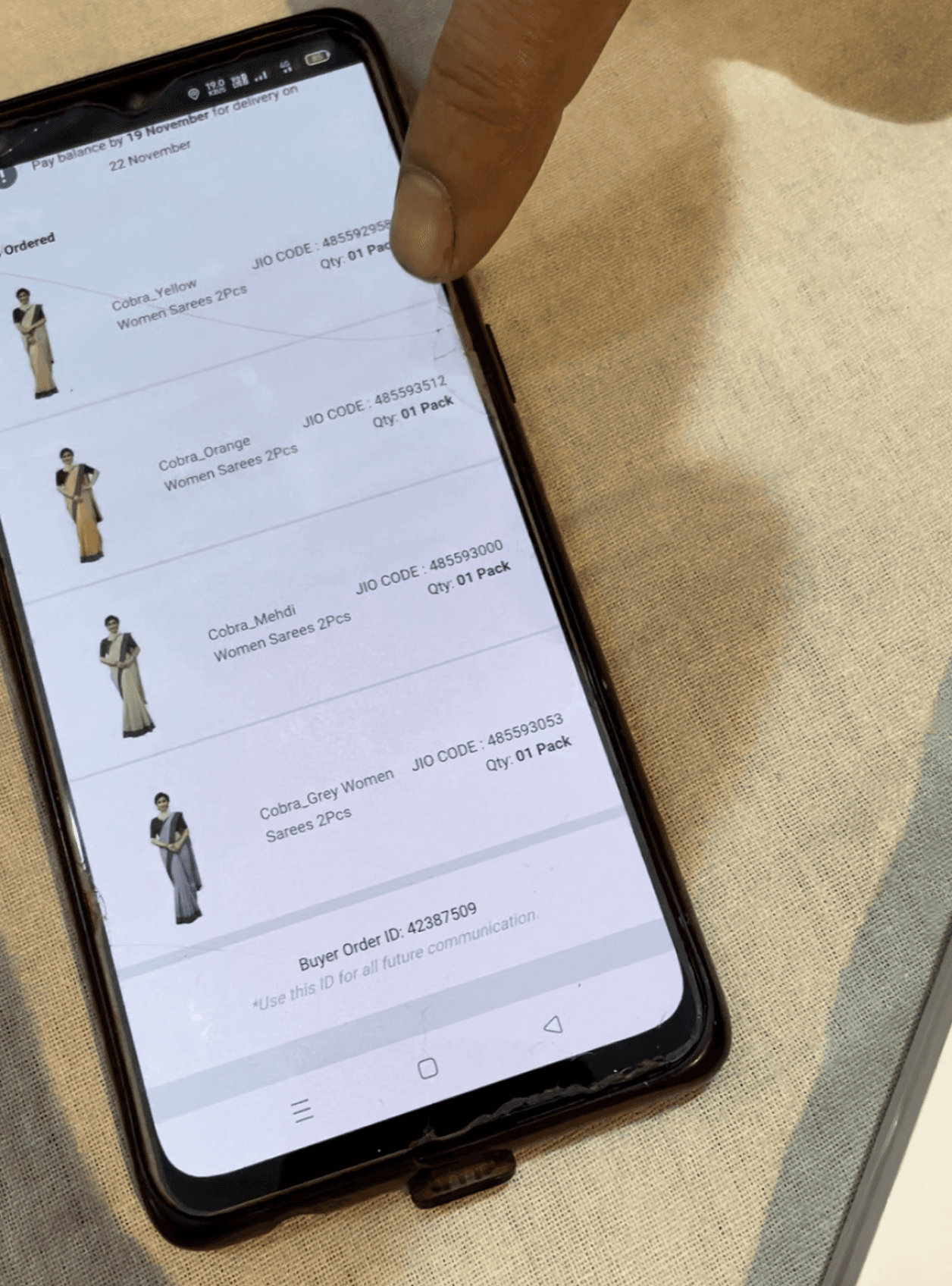
Clear demand, unclear discovery: Retailers can’t easily find the right packs for them, despite knowing what are fast-moving items for their store
Pack names were confusing, representations were unclear and inconsistent across categories - leading to endless back-and-forth with no match
Customisation was limited or misunderstood
Clear demand, unclear discovery: Retailers can’t easily find the right packs for them, despite knowing what are fast-moving items for their store
Pack names were confusing, representations were unclear and inconsistent across categories - leading to endless back-and-forth with no match
Customisation was limited or misunderstood
Why it matters
Retailers waste time searching for the right size-colour mix with packs, find it hard to text new products and have don’t feel they get the same level of trust and flexibility as they do in offline wholesale marketplaces
Retailers waste time searching for the right size-colour mix with packs, find it hard to text new products and have don’t feel they get the same level of trust and flexibility as they do in offline wholesale marketplaces
“Smaller sizes sell more - 6, 7, 8 especially 7 & 8. Stock of 9, 10 always left with me as bigger sizes are very rare here”
“Smaller sizes sell more - 6, 7, 8 especially 7 & 8. Stock of 9, 10 always left with me as bigger sizes are very rare here”
“Smaller sizes sell more - 6, 7, 8 especially 7 & 8. Stock of 9, 10 always left with me as bigger sizes are very rare here”
- P1: Footwear Retailer, Delhi
- P1: Footwear Retailer, Delhi
“In Inderlok (offline market), sellers adjust. If I need more size 9 and fewer 6, they make it work.”
“In Inderlok (offline market), sellers adjust. If I need more size 9 and fewer 6, they make it work.”
“In Inderlok (offline market), sellers adjust. If I need more size 9 and fewer 6, they make it work.”
- P2: Footwear Retailer, Bangalore
- P2: Footwear Retailer, Bangalore
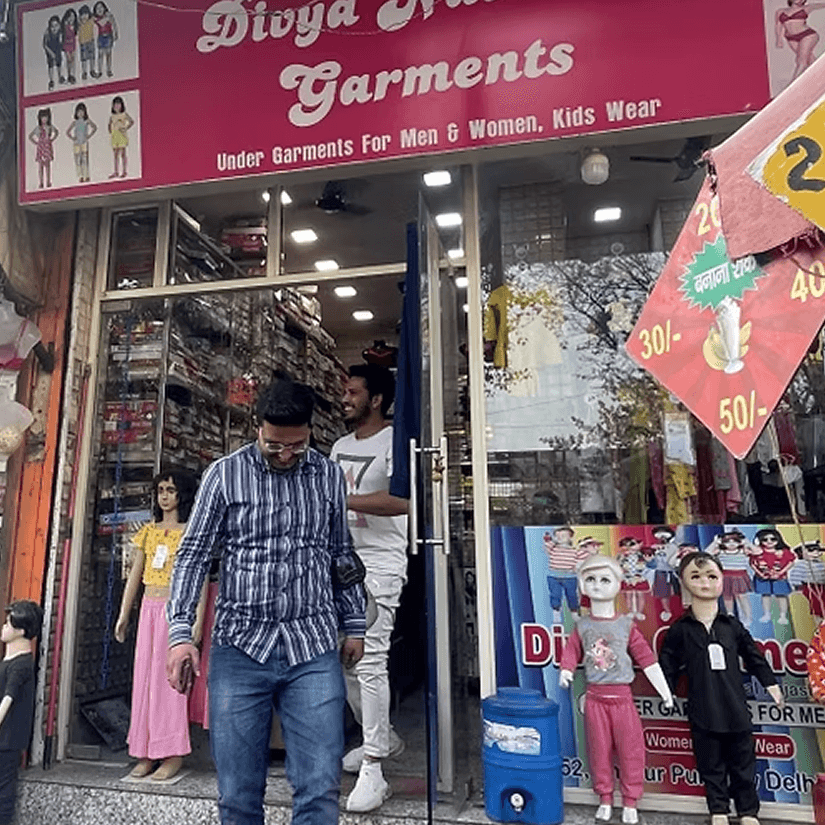
“I avoid assorted packs. They send random colours and sizes. Some items work, some simple won't sell."
“I avoid assorted packs. They send random colours and sizes. Some items work, some simple won't sell."
“I avoid assorted packs. They send random colours and sizes. Some items work, some simple won't sell."
- P4: Saree Retailer, Delhi
- P4: Saree Retailer, Delhi
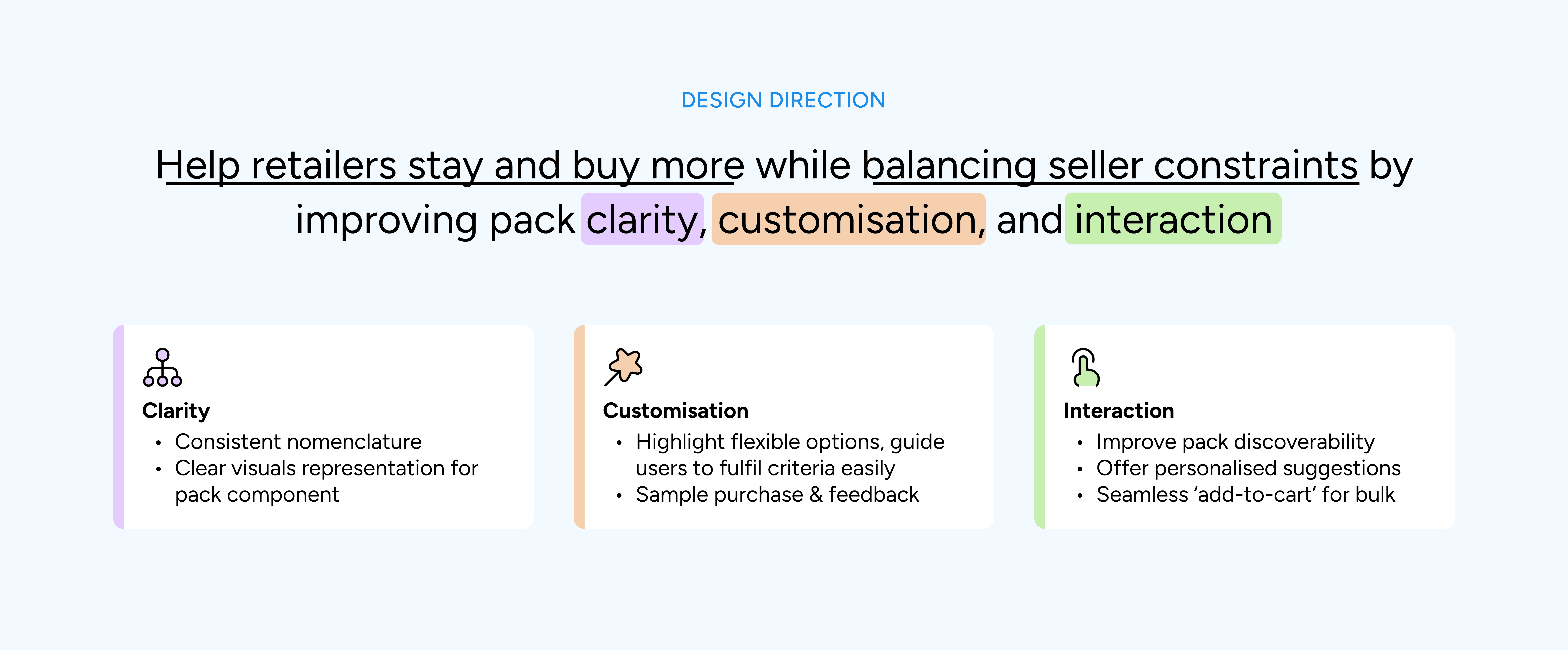
Design for clarity
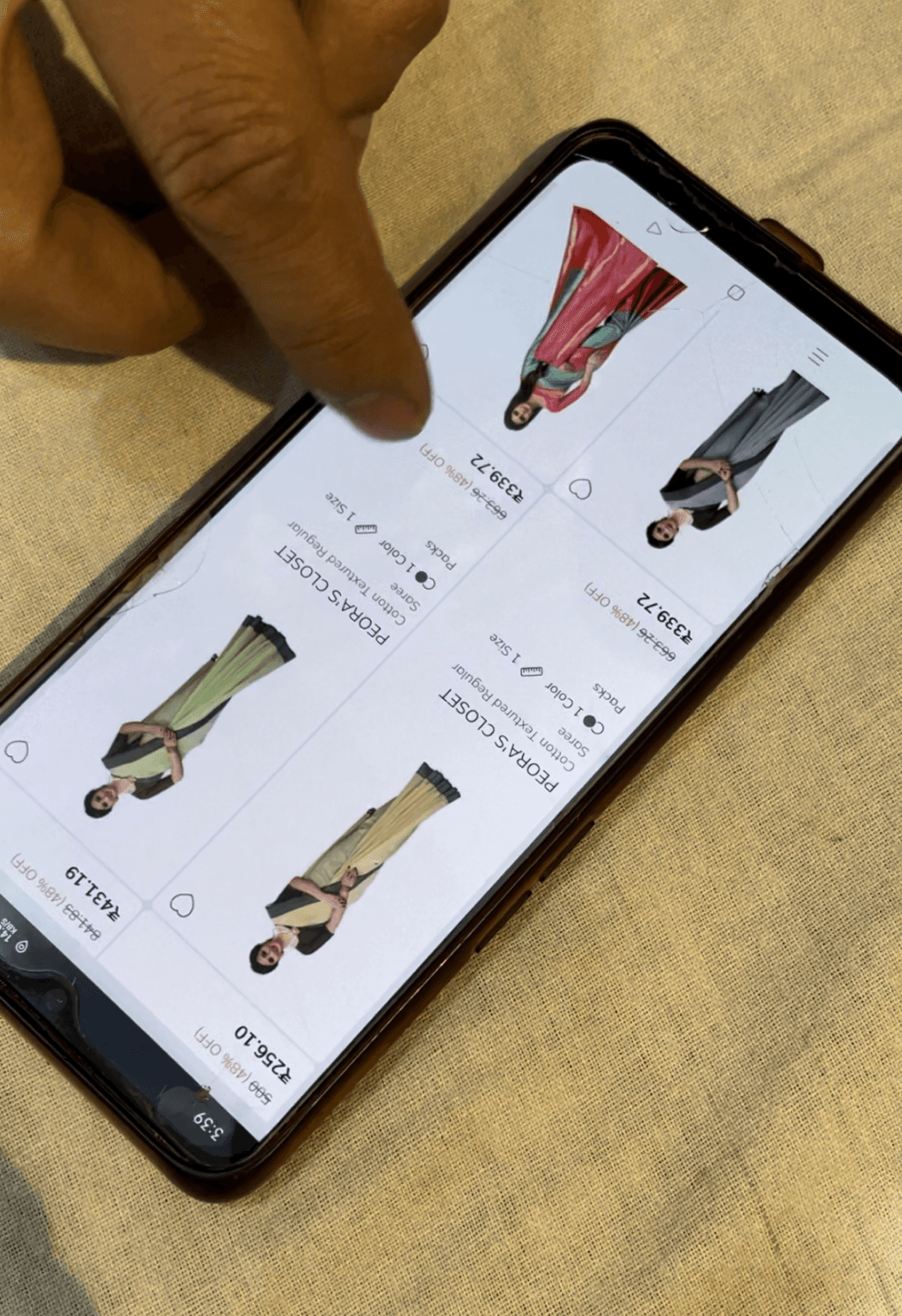
Pack discovery suffers when naming lacks clarity and visuals don’t support comparison
Pack discovery suffers when naming lacks clarity and visuals don’t support comparison
Pack discovery suffers when naming lacks clarity and visuals don’t support comparison
“I ordered an assorted pack but it came with all the same colours only so I had to return it. I expected 3 colours but it came with almost all white, only one pink and no black shoes.”
- P3: Footwear Retailer, Delhi
“Newly born sold more. Boys: In a pack of 22, 24, 26 - 26 sells more, depletes faster whereas 22, 24 often left with us. We want only 26 pack sometimes, which we don't get”
- P3: Apparel Retailer, Delhi
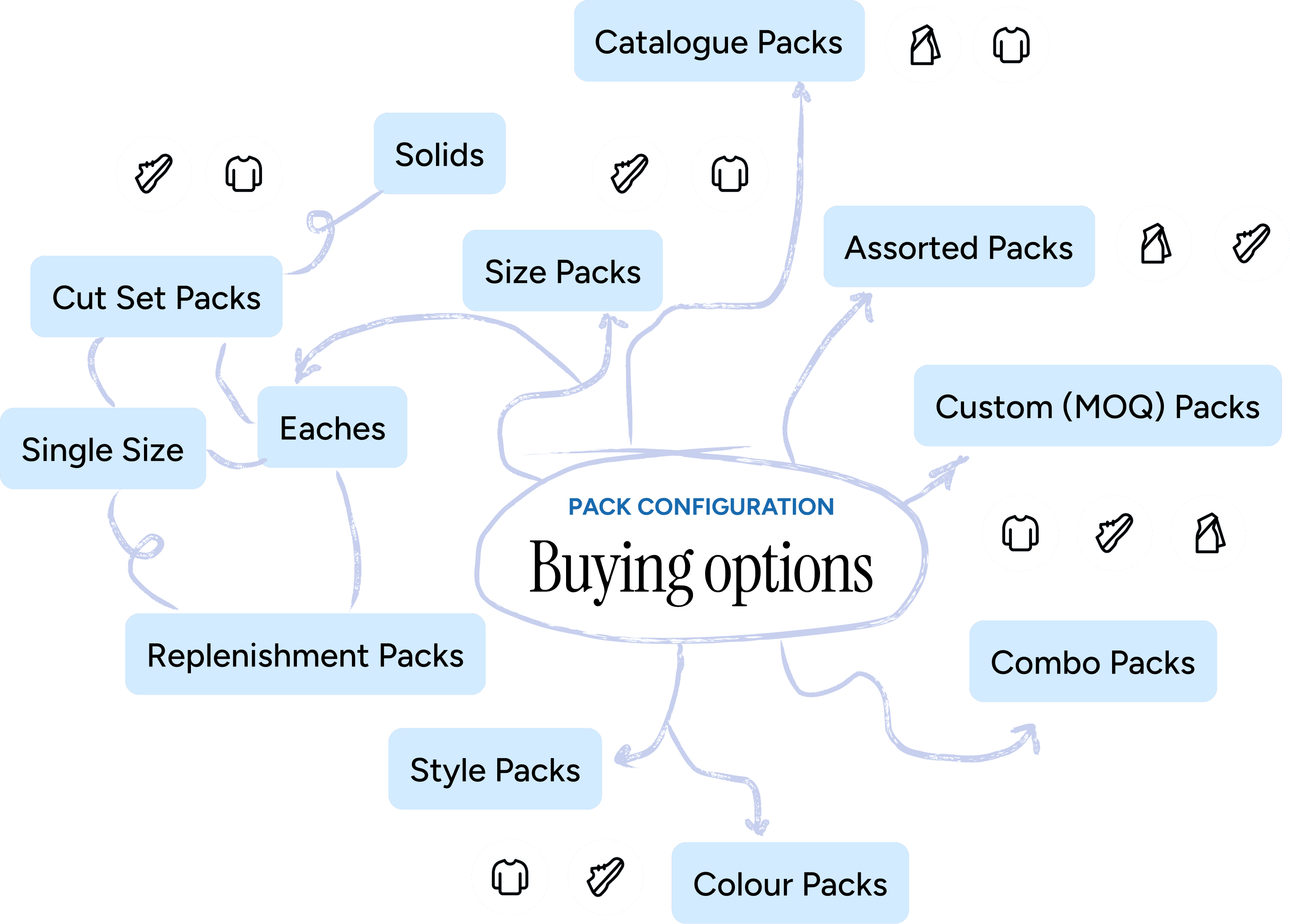
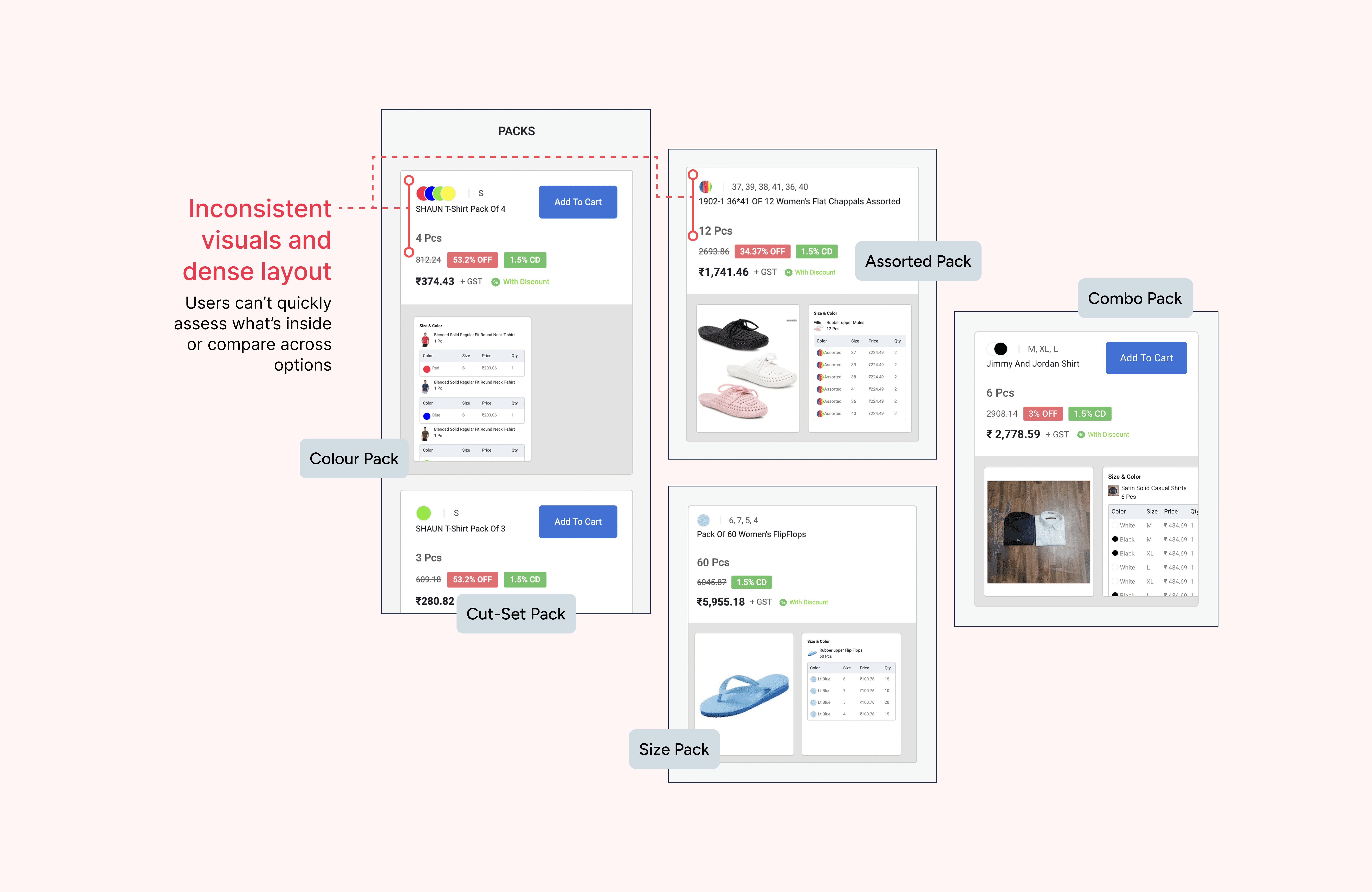
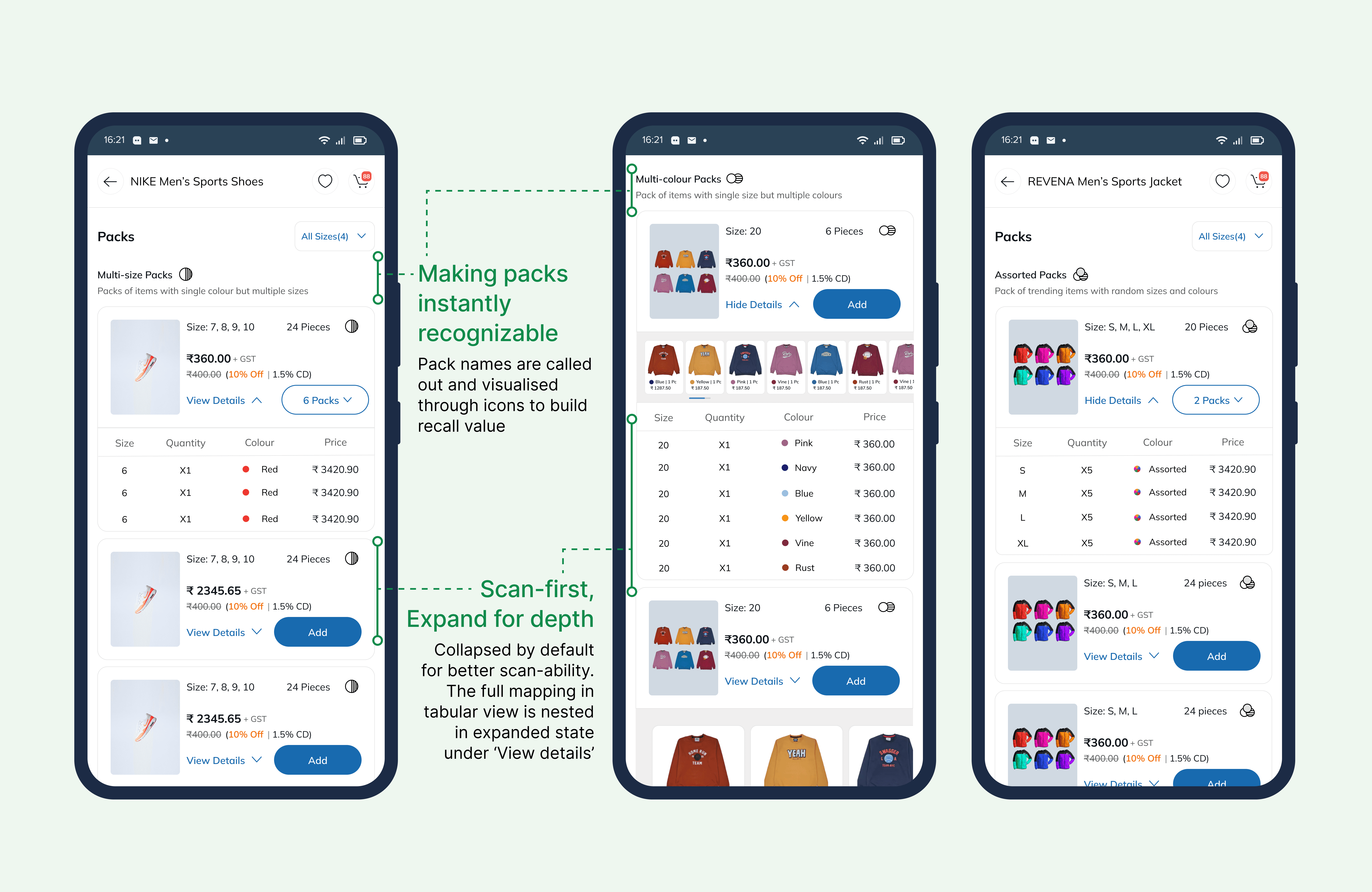
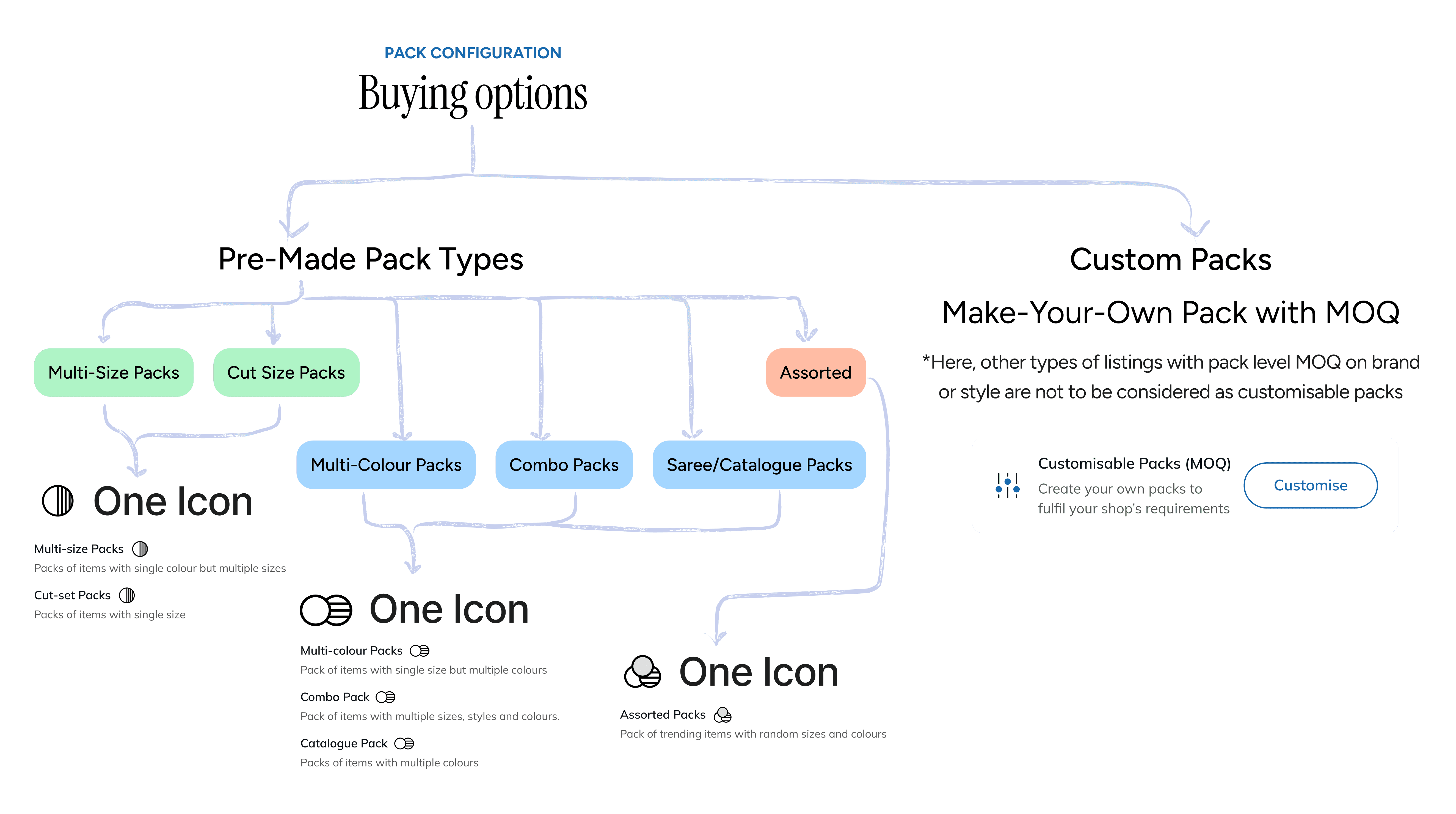
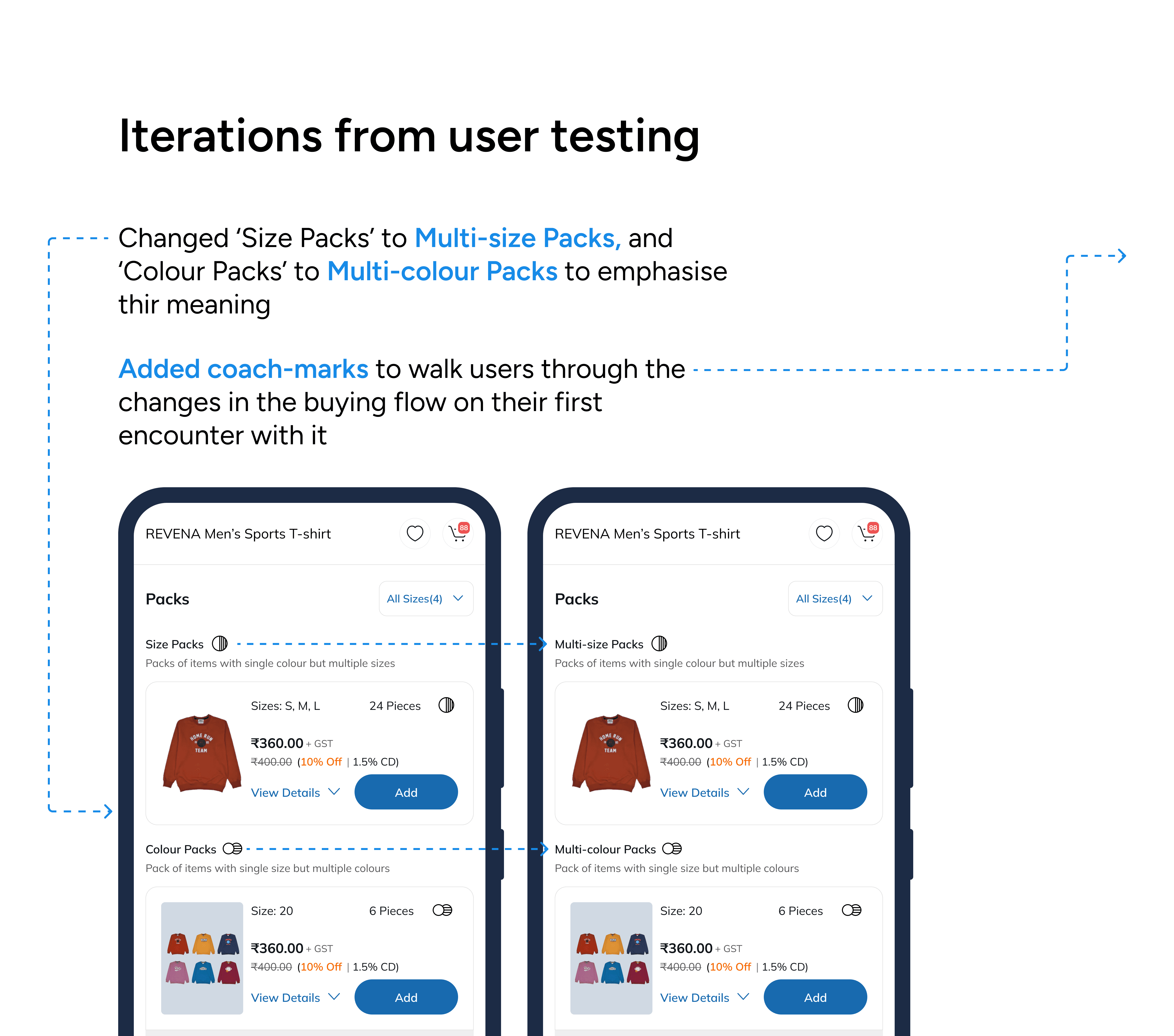
Clearer labels and layouts
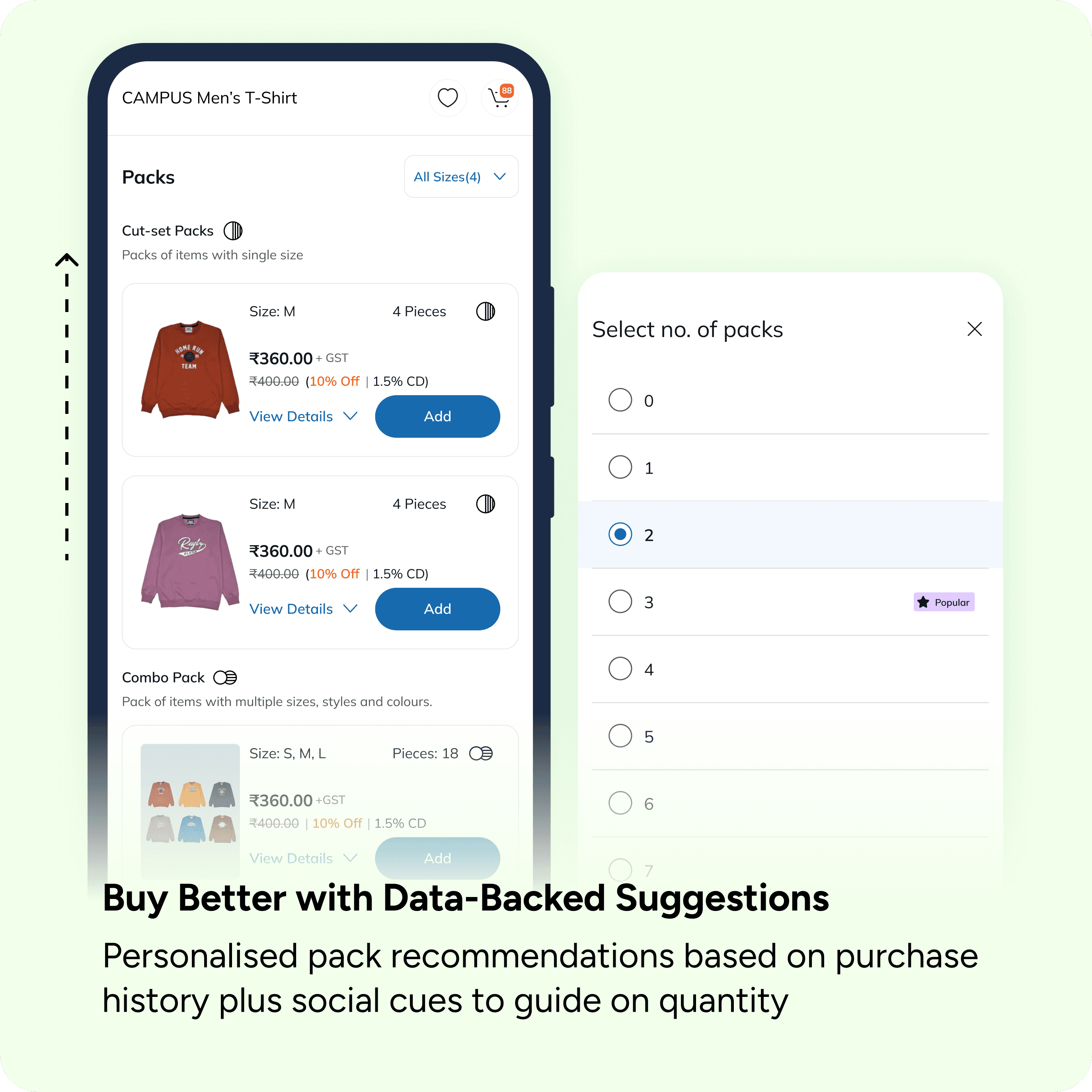
Standardised Pack Types and Visual Scannability to Aid Decision-Making
Standardised Pack Types and Visual Scannability to Aid Decision-Making
Standardised Pack Types and Visual Scannability to Aid Decision-Making
Design for FLEXIBle Customisation
Some brands offered flexibility to pick and choose sizes and colours with MOQ (Minimum Order Quantity) criteria, but it needed to be made more intuitive for retailers to gain trust in it
Some brands offered flexibility to pick and choose sizes and colours with MOQ (Minimum Order Quantity) criteria, but it needed to be made more intuitive for retailers to gain trust in it
Some brands offered flexibility to pick and choose sizes and colours with MOQ (Minimum Order Quantity) criteria, but it needed to be made more intuitive for retailers to gain trust in it
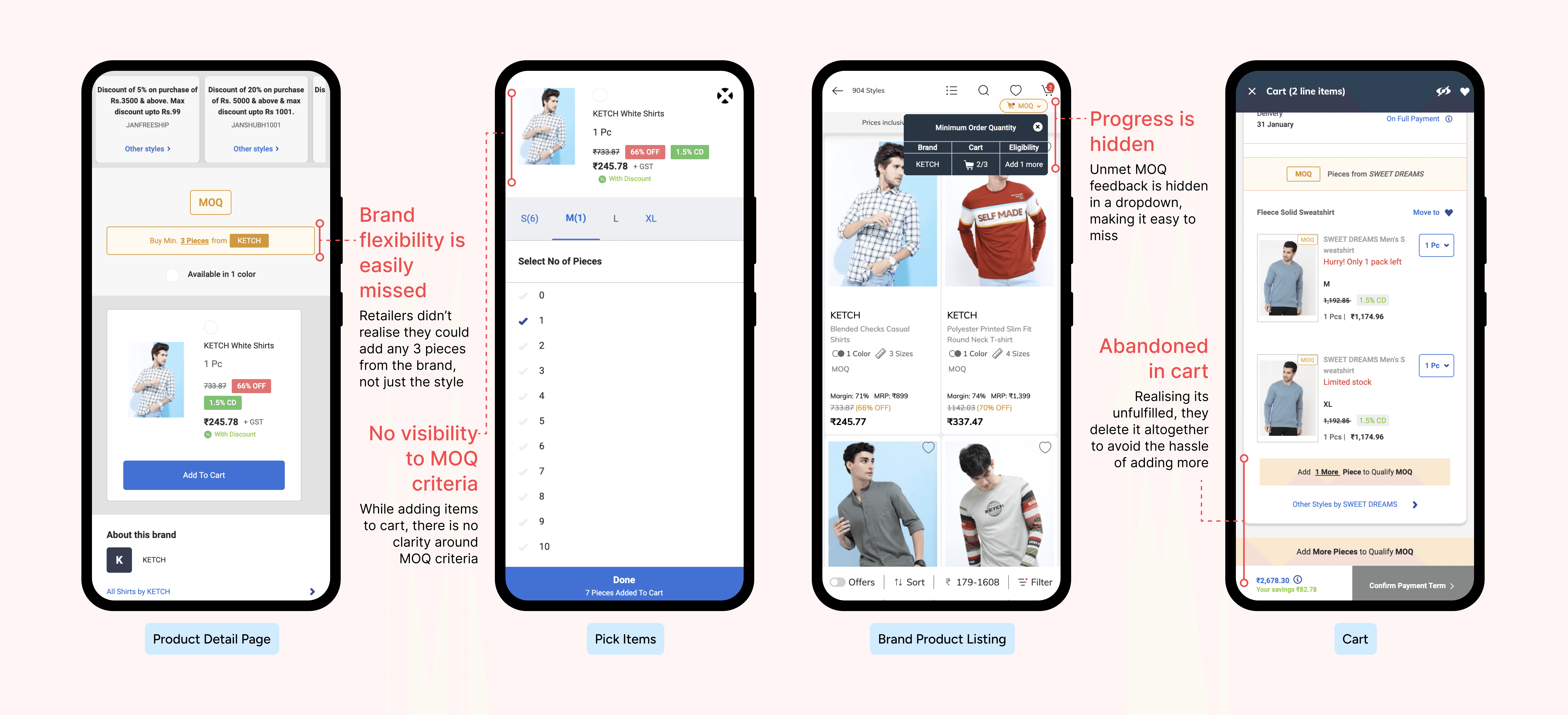
THE problem with MOQ
MOQ: the feature that promised customisability, but failed in execution
MOQ: the feature that promised customisability, but failed in execution
MOQ: the feature that promised customisability, but failed in execution
MOQ allows retailers to mix sizes & styles from a brand, as long as a minimum quantity is met
But lack of clarity on what qualifies led to confusion
Unmet MOQ = Checkout failure → Loss of trust
Retailers avoided it altogether, missing out on flexible buying
MOQ allows retailers to mix sizes & styles from a brand, as long as a minimum quantity is met
But lack of clarity on what qualifies led to confusion
Unmet MOQ = Checkout failure → Loss of trust
Retailers avoided it altogether, missing out on flexible buying
Making it work
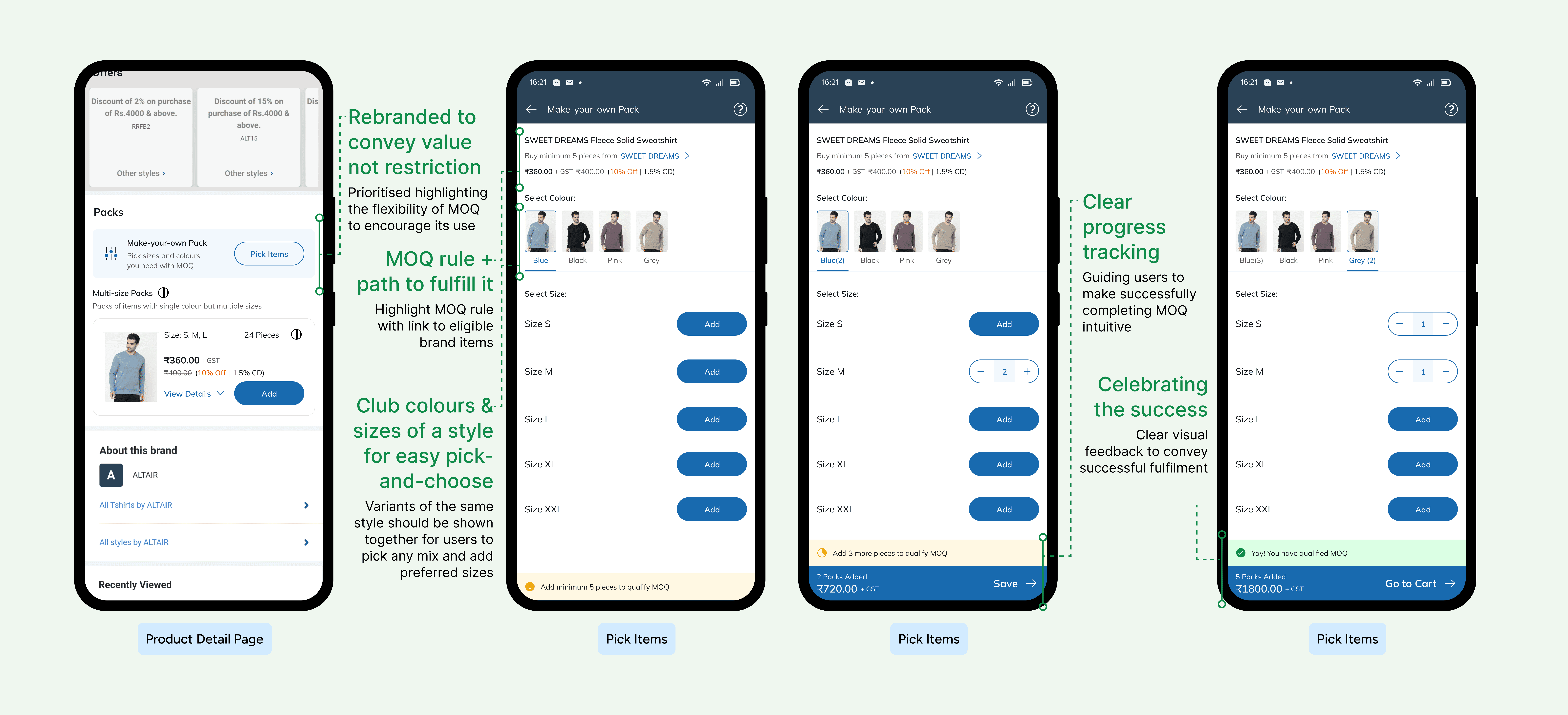
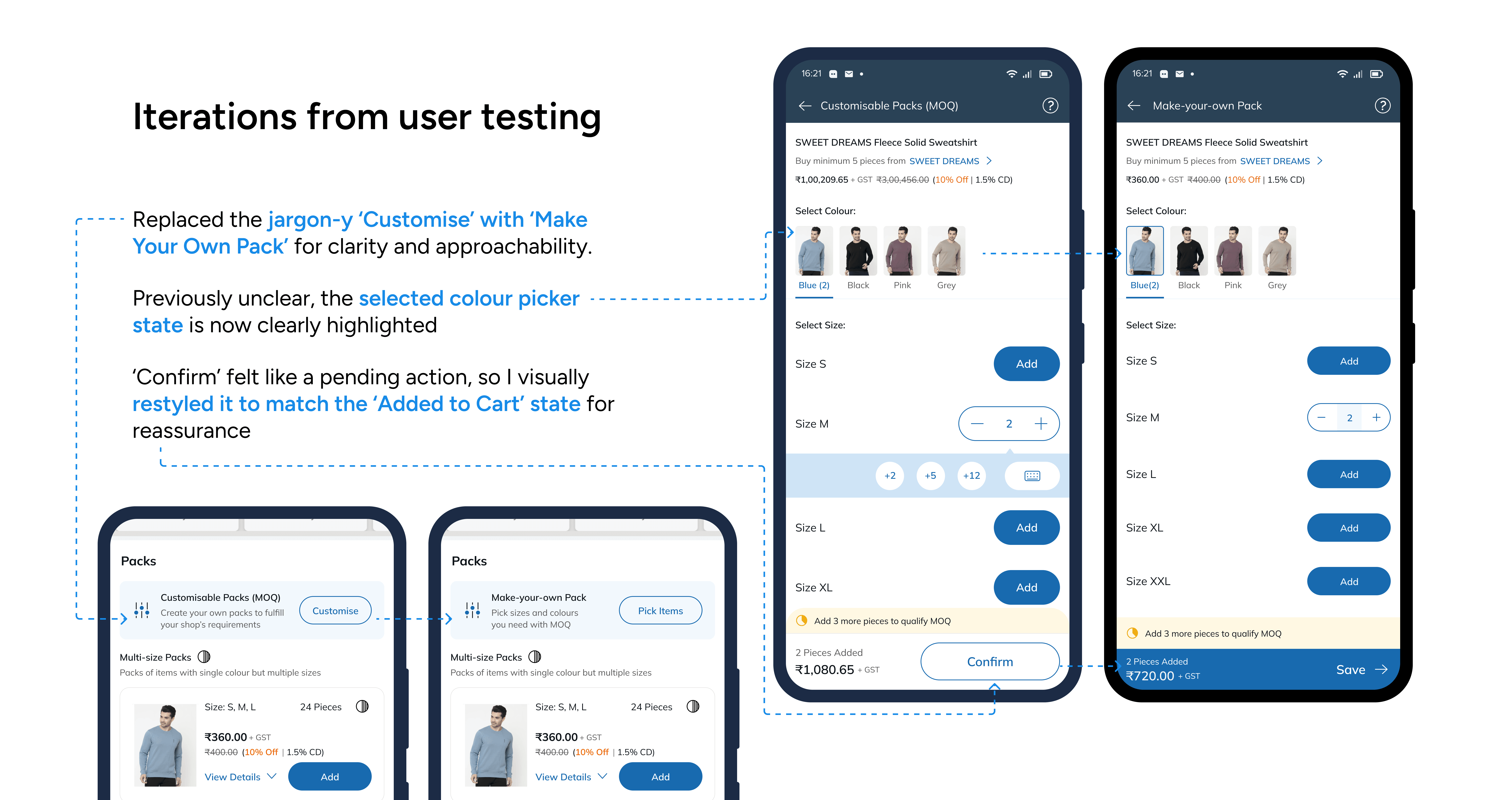
Rebuilding Trust in MOQ, making “Pick & Choose” value real and usable
Rebuilding Trust in MOQ, making “Pick & Choose” value real and usable
Rebuilding Trust in MOQ, making “Pick & Choose” value real and usable
Rebrand MOQ as “Make Your Own Pack” to highlight flexibility
Show real-time progress toward MOQ goal in-cart
Clearly indicate all eligible items from the brand
Allow retailers to easily track and fulfil MOQ with guided cues
Rebrand MOQ as “Make Your Own Pack” to highlight flexibility
Show real-time progress toward MOQ goal in-cart
Clearly indicate all eligible items from the brand
Allow retailers to easily track and fulfil MOQ with guided cues
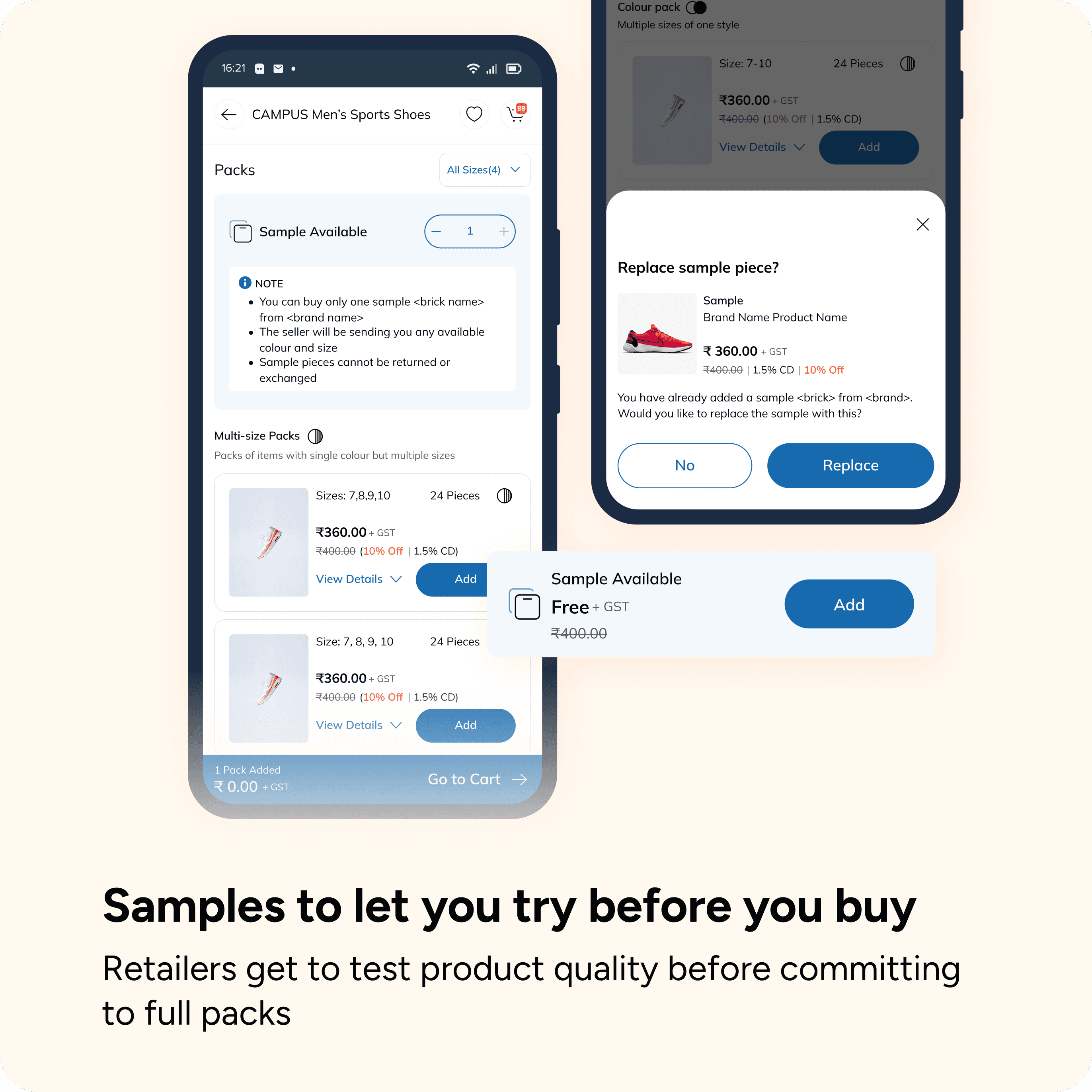
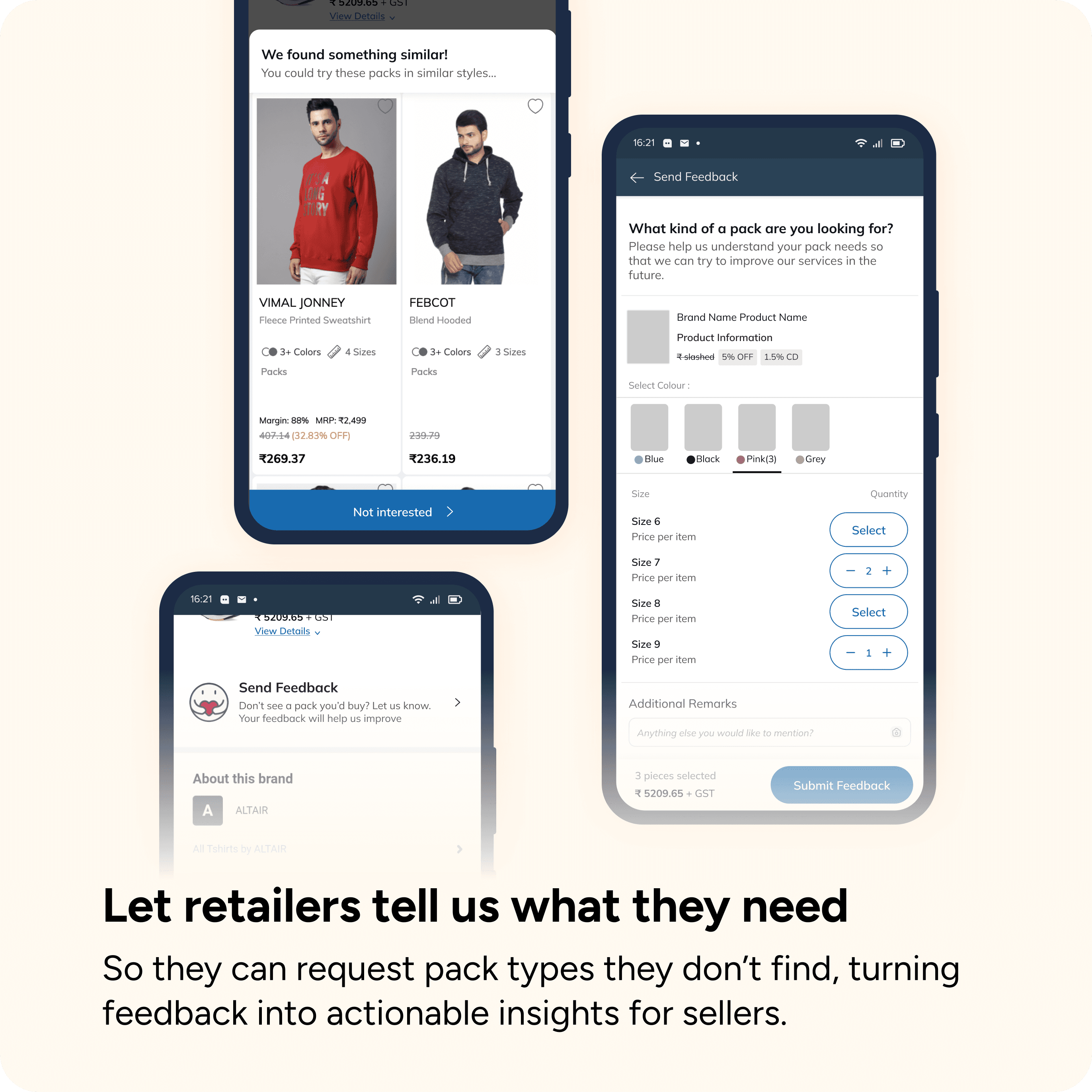
Design for Frictionless interaction
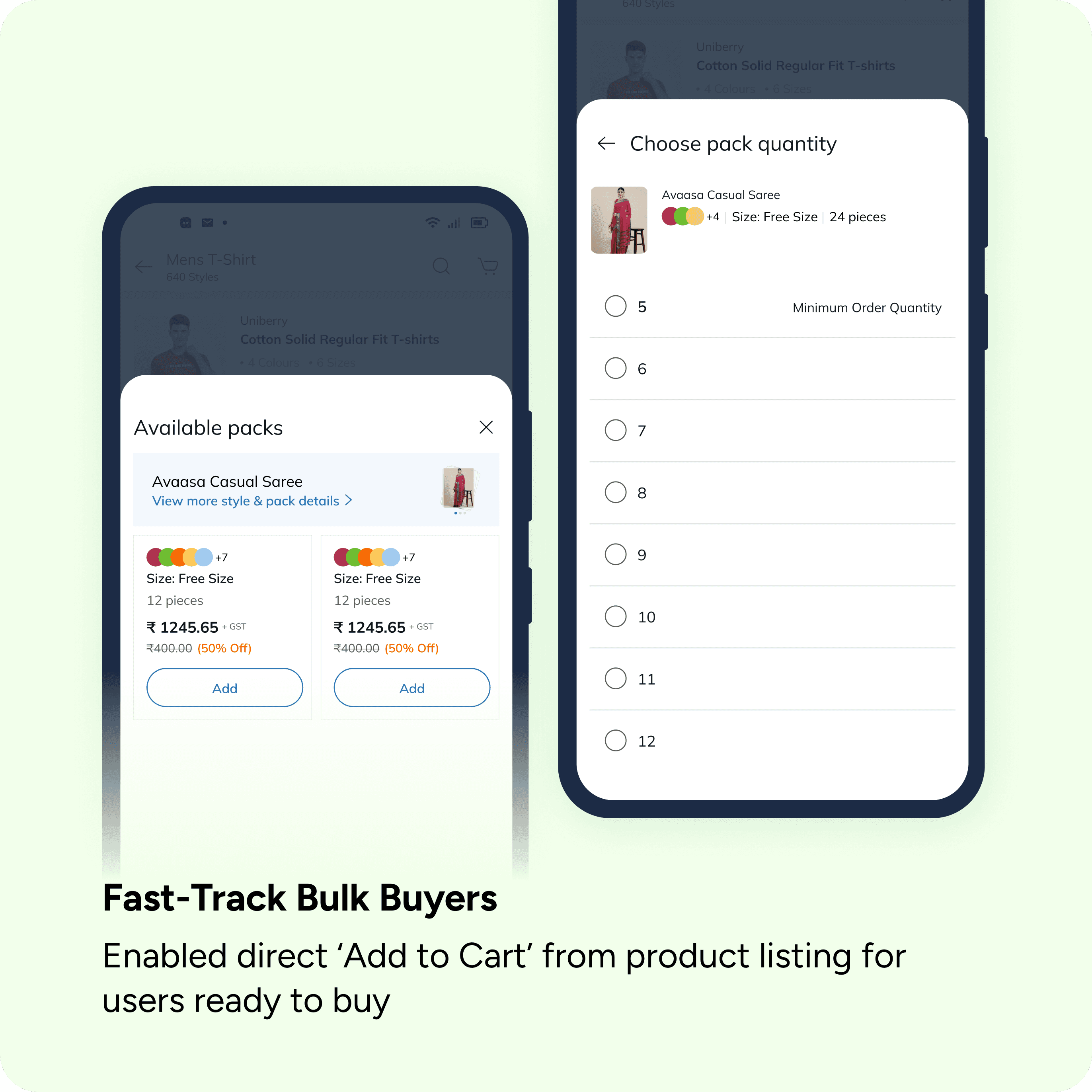
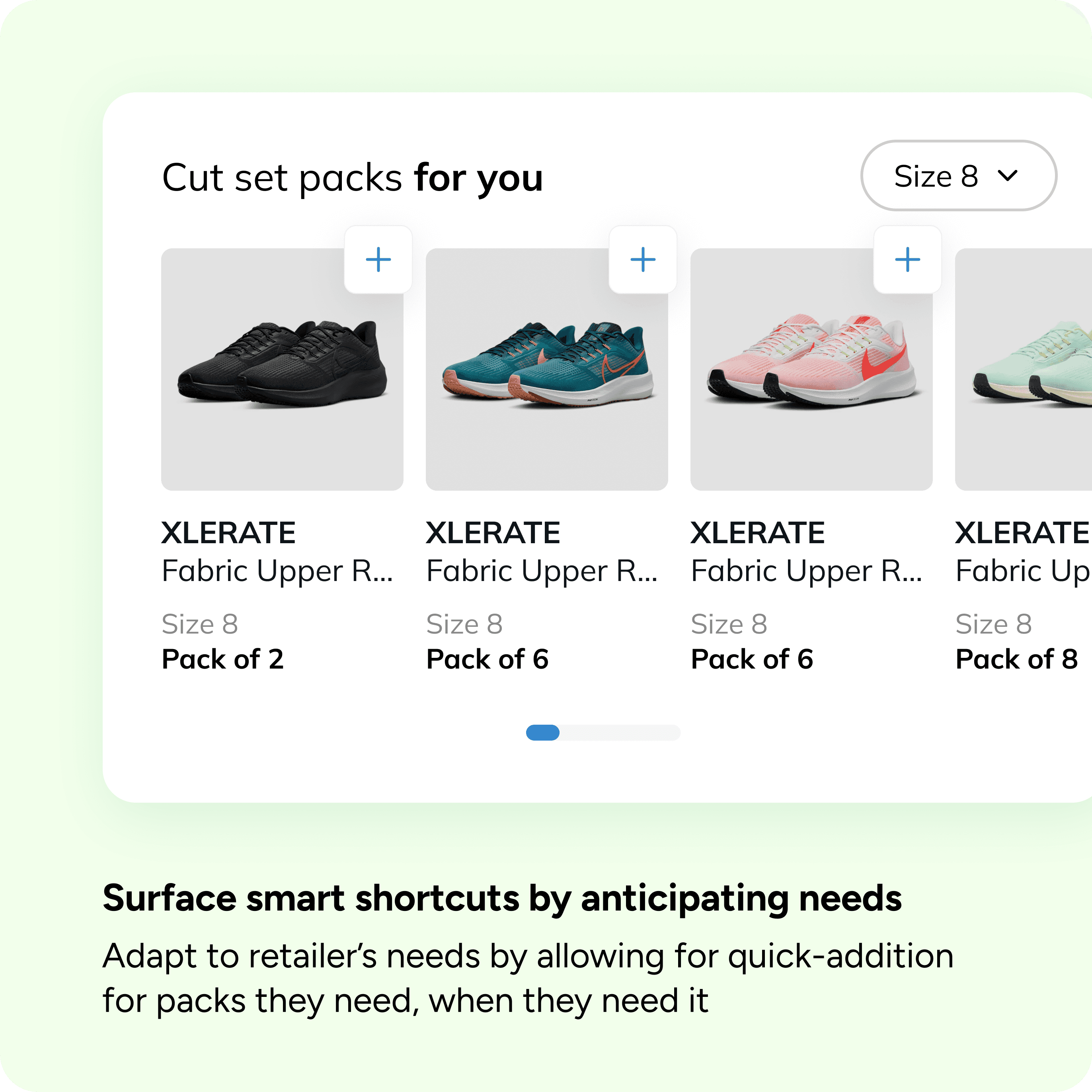
Friction in the buying flow was costing conversions
Friction in the buying flow was costing conversions
Friction in the buying flow was costing conversions
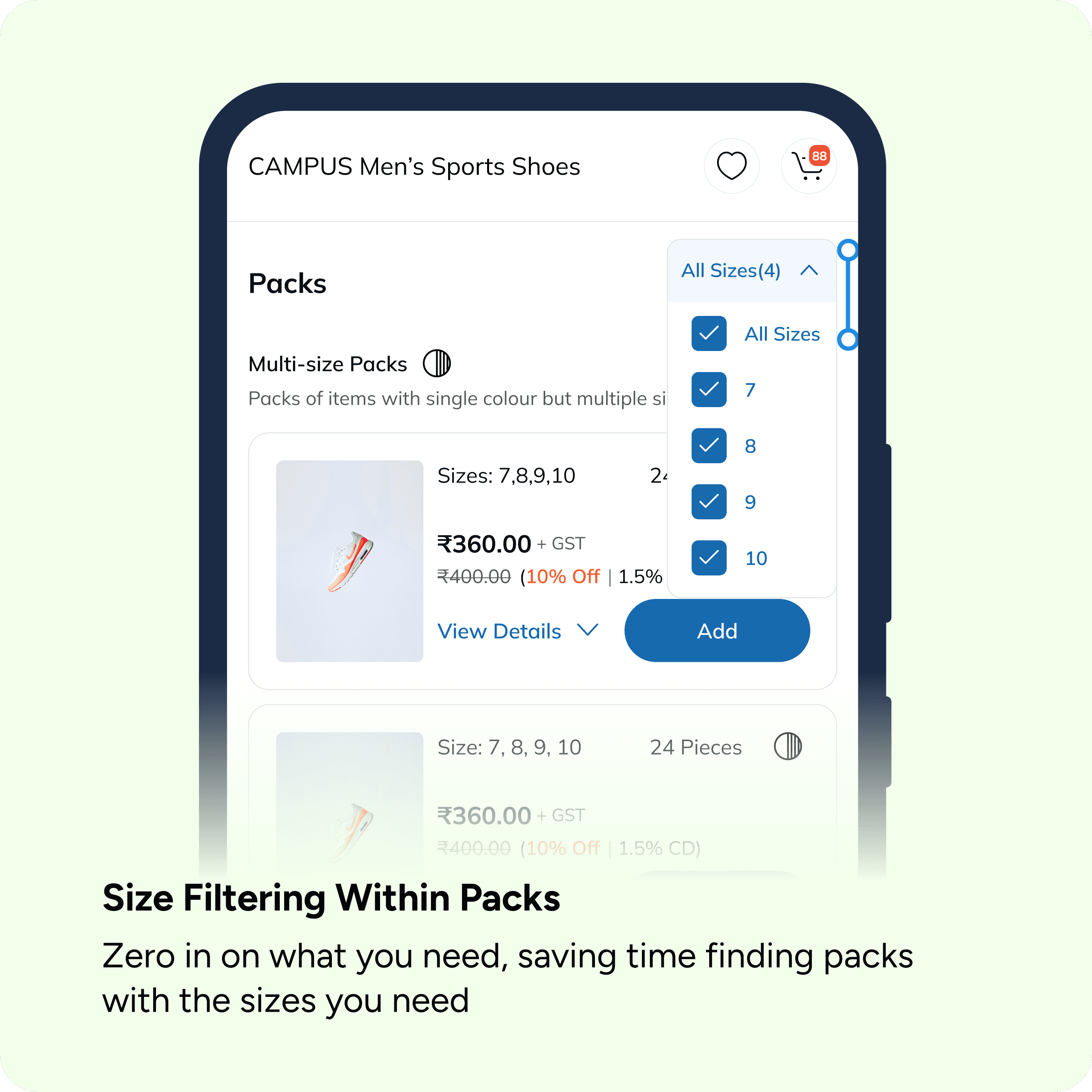
So I re-designed with the aim to reduce friction and support quick decisions
So I re-designed with the aim to reduce friction and support quick decisions
• Impact & Learnings
THE Impact
Laying the groundwork for seamless buying
Laying the groundwork for seamless buying
Laying the groundwork for seamless buying
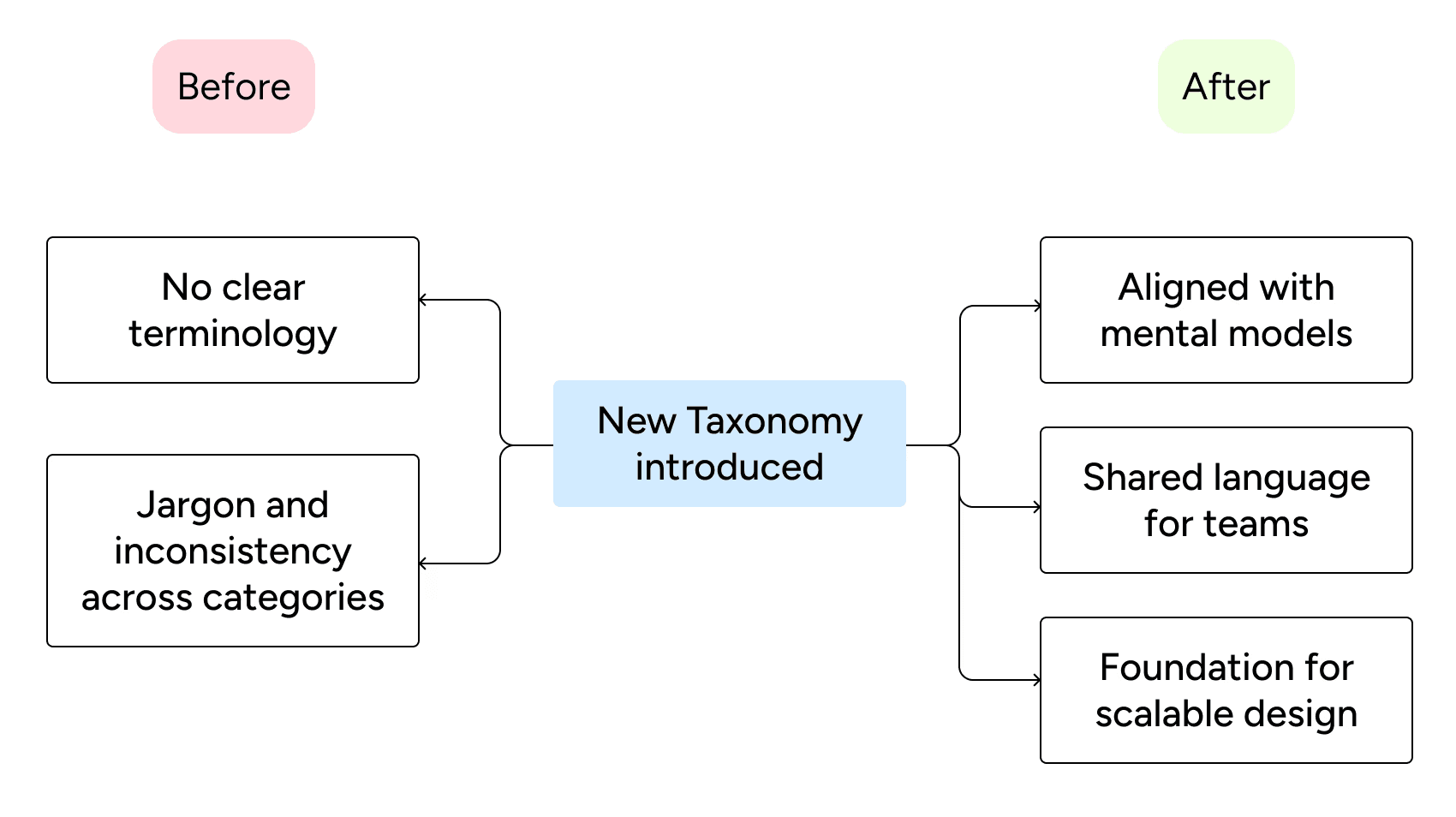
Established a clear, scalable framework for pack naming and representation -eliminating jargon, aligning with retailer behaviour, and creating a shared language across teams to drive consistency & smoother collaboration across the buying journey.
Presented research and design insights to senior leadership, driving alignment on buying pain points and unlocking buy-in for roadmap shifts.
Generated high adoption and positive qualitative feedback from internal stakeholders, including category heads and sellers.
Established a clear, scalable framework for pack naming and representation -eliminating jargon, aligning with retailer behaviour, and creating a shared language across teams to drive consistency & smoother collaboration across the buying journey.
Presented research and design insights to senior leadership, driving alignment on buying pain points and unlocking buy-in for roadmap shifts.
Generated high adoption and positive qualitative feedback from internal stakeholders, including category heads and sellers.
Learnings
Building for Complexity, Grounded in Reality
Building for Complexity, Grounded in Reality
Building for Complexity, Grounded in Reality
Designing for one isn’t enough: Serving retailers alone didn’t work, solutions had to balance the needs of sellers, manufacturers, and business teams too
Test early, pivot often: User feedback helped catch flawed assumptions and guided design toward what actually worked
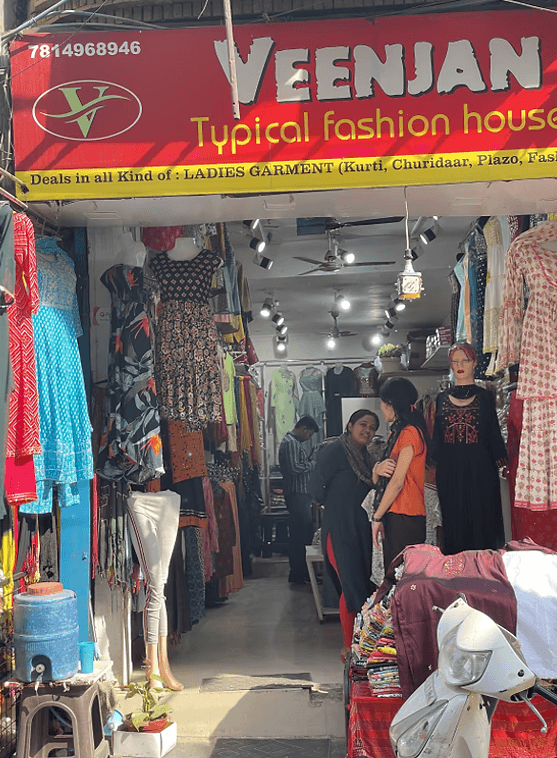
You can’t design local from afar: Understanding retailers’ real-world buying behaviour meant immersing in their daily context, not just app flows.
Work in progress is powerful: Sharing early and in-progress design work for feedback helped gain buy-in
Developing generalist chops: Leading the rollout in close collaboration with domain specific experts strengthened my grasp of the end-to-end process
Designing for one isn’t enough: Serving retailers alone didn’t work, solutions had to balance the needs of sellers, manufacturers, and business teams too
Test early, pivot often: User feedback helped catch flawed assumptions and guided design toward what actually worked
You can’t design local from afar: Understanding retailers’ real-world buying behaviour meant immersing in their daily context, not just app flows.
Work in progress is powerful: Sharing early and in-progress design work for feedback helped gain buy-in
Developing generalist chops: Leading the rollout in close collaboration with domain specific experts strengthened my grasp of the end-to-end process